Projects
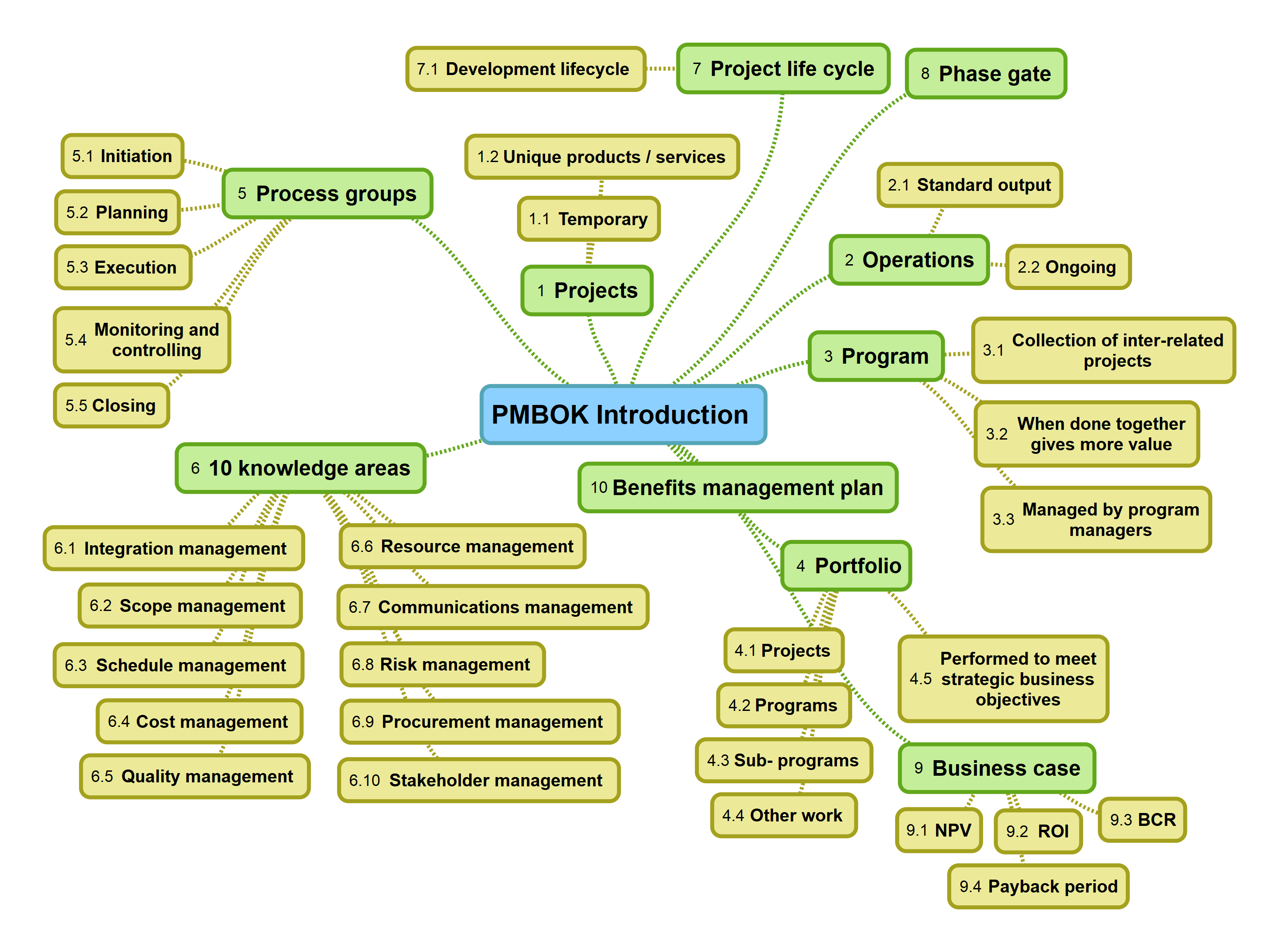
Projects are temporary endeavours, performed by people to meet strategic business objectives. Every project has start and end dates. Every project delivers unique products or services as outputs. Projects are managed by project managers.
Operations
Operations are ongoing in nature. Operations produces standard outputs. Operations are managed by operations managers. Designing a car is a project. Manufacturing cars is an example for operations.
Programs
A program is a collection of inter-related projects which when done together gives some added benefits which are not available when done as individual projects. Programs can contain sub-programs, projects, sub-projects. Programs are managed by program managers. The project managers of the constituent projects of the program report to the program manager.
Portfolio
Businesses have strategic business objectives to be met. These are achieved through proper selection and execution of programs, sub-programs, projects, sub-projects and other work. They are collectively called us project portfolio. Organisational portfolios can exist at the organization, division, department, location wise and are integrated. Portfolios are managed by portfolio managers. The constituent program managers report to the portfolio managers. Portfolio management is always associated with the accomplishment of business goals.
The 5 process groups
PMBOK comprises of five process groups namely;
- Initiation
- Planning
- Execution
- Monitoring & Controlling
- Closing
The 10 Knowledge areas
- Project integration management
- Project scope management
- Project schedule management
- Project cost management
- Project quality management
- Project resource management
- Project communications management
- Project risk management
- Project procurement management
- Project stakeholder management
Reference – Project Management Body of Knowledge (PMBOK) Version 6, by the Project Management Institute (PMI) , USA.

 Wrench Academy