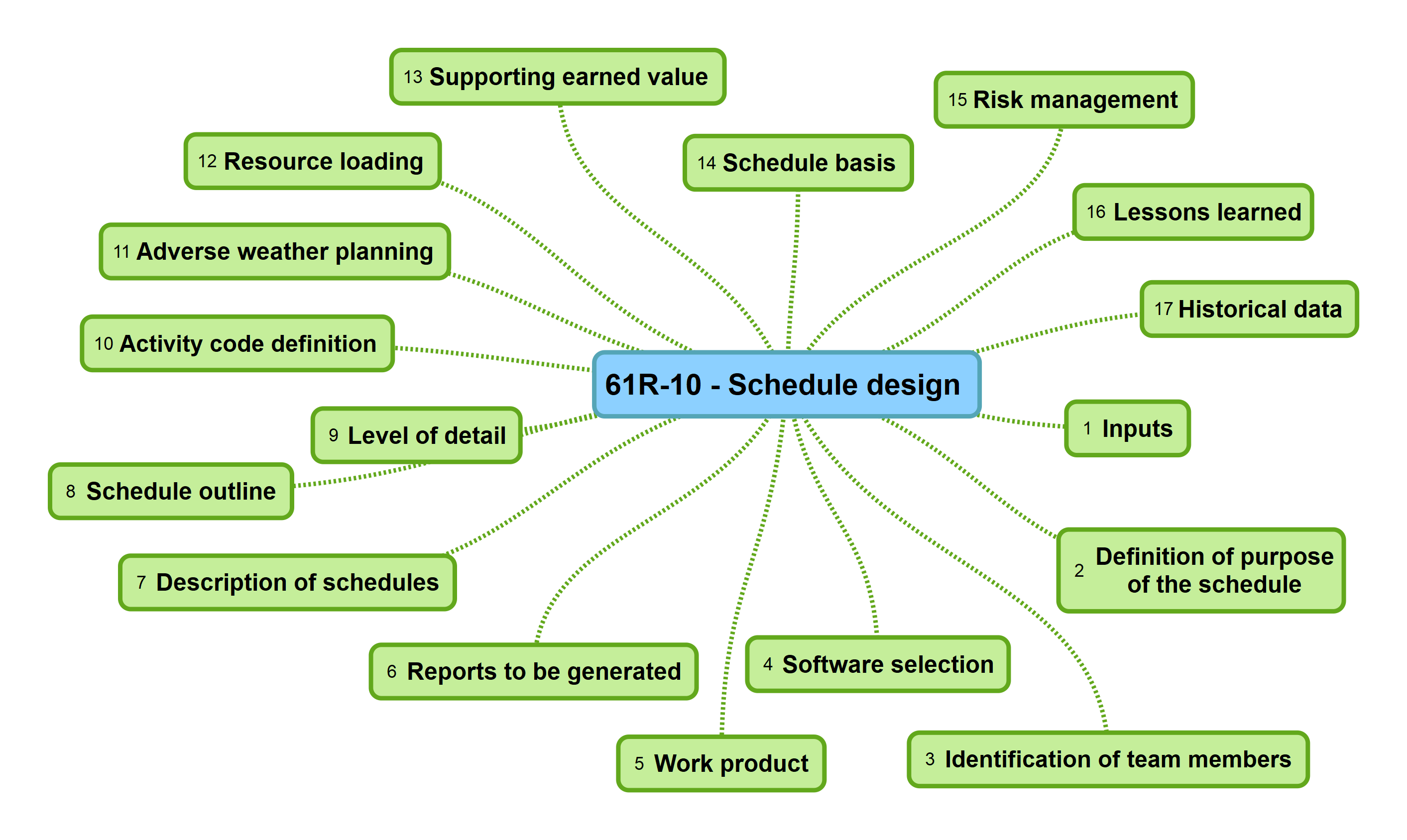
Mindmap for Schedule design recommended practice 61R-19
Purpose
Schedule design is the collection, coordination, and organization of the inputs necessary to translate the execution strategy into a well-developed schedule. The main purposes of the schedule design process are to fully align the schedule with the project execution strategy and to satisfy the stakeholder needs from the schedule in terms of level of details, ease of monitoring, timely access, provision of sufficient control mechanisms for time and scope, documentation needs etc.
Collection of input data
- Contracting strategy
- Plans and specifications
- Scheduling specifications
- Owner produced master or preliminary schedule
- Liquidated damages schedule
- Area designation plan
- Lay down area plan
- LEED requirements
- Formal phasing/sequencing plan
- Sequences planned by major trades
- Resource availability
- Estimate and quantity surveys
- Bills of materials
- Production / productivity data
- Purchasing information
- Cash flow plan
- Escalation / currency exchange plan
- Requirements for material or equipment delivery
- Commissioning requirements
Identification of team members
- Who needs to be involved with the schedule development?
- Identifying all schedule stakeholders and defining their roles
- Process for schedule submission and approval
- Schedule change management process
- Frequency for submission of regular updates
Identifying responsibilities
- Schedule design
- Schedule development
- Schedule statusing
- Schedule updating / analysis
- Schedule reporting
- Change management
- Recovery
- Close out
Software selection
- Hardware and software
- Compatibility / integration / cost
- Users and levels of access
- Scheduling requirements
- Master schedule
- Sub-schedules
- Level of detail
- Common date for data updates
- Reporting capabilities
Work product
- Intended use of the schedule
- Attributes to support EVMS
- Resource loading
- Milestone payments
Reports to be generated
- Ability to support the reporting needs
Description of schedules
- Identification of the different types of schedules to be used
- Integration of these schedules to the master schedule
Schedule outline
- Key schedule activities to monitor
- Project milestones and definitions
- Long lead procurement items
- Site or other constraints
- Work breakdown structures
- Work packages
- Contracting / Sub-contracting issues
Level of detail
- Depends on the nature, size, duration, and complexity of the project
- Too much details and too less details are problems
- A trade-off comes in the capability to monitor and update the work
- Bottom up approach Vs Top down approach Vs Combination for schedule development
- Identification of functional stages
- Common groups based on predicted rate of progress
- Smallest activity duration Vs schedule update frequency
Activity code definition
- Key for activity based analysis
- Work phase
- Structure
- Area
- Floor or station
- Location
- Responsibility
- Discipline
- Work shifts
- Costs
- Resource
- Specification
- Change management
- Facilitates selective reporting / analysis based on stakeholder needs
- Activity code dictionaries
Adverse weather planning
- How to plan for adverse weather?
Resources
- Resource loading
- Analysis
- Cashflow
- Reporting
Supporting Earned Value
Schedule basis
- High level summary of the schedule
- Description of the schedule contents
Risk management
- Known and potential problems
- Contingency actions
- Response actions
- Accounting for contingencies
Lessons learned and historical data
Schedule design documentation
- Formal procedure
- Checklists for each section
- Record of data and decisions made

 Wrench Academy